



Epoxy vs Cement Grout: Which Is Best for Swimming Pool Tiles?
Grout looks like a minor detail until it fails. A pool is the harshest place for it: constant water, chlorine or salt, sun, and temperature swings. Cracked or stained joints let water slip behind the tiles, and that’s how tiles start popping off. So the choice between epoxy and cement grout matters more here than in a bathroom.
Short answer: epoxy grout is the better performer in most pools, because it’s non-porous and shrugs off chemicals. Cement grout costs far less and still works well in many installations, especially polymer-modified types on ceramic waterline tiles. This guide compares the two on chemical resistance, saltwater, cost, tile compatibility, joint width and upkeep, so you can match the grout to your pool and budget.
What Is The Difference Between Epoxy And Cement Grout?
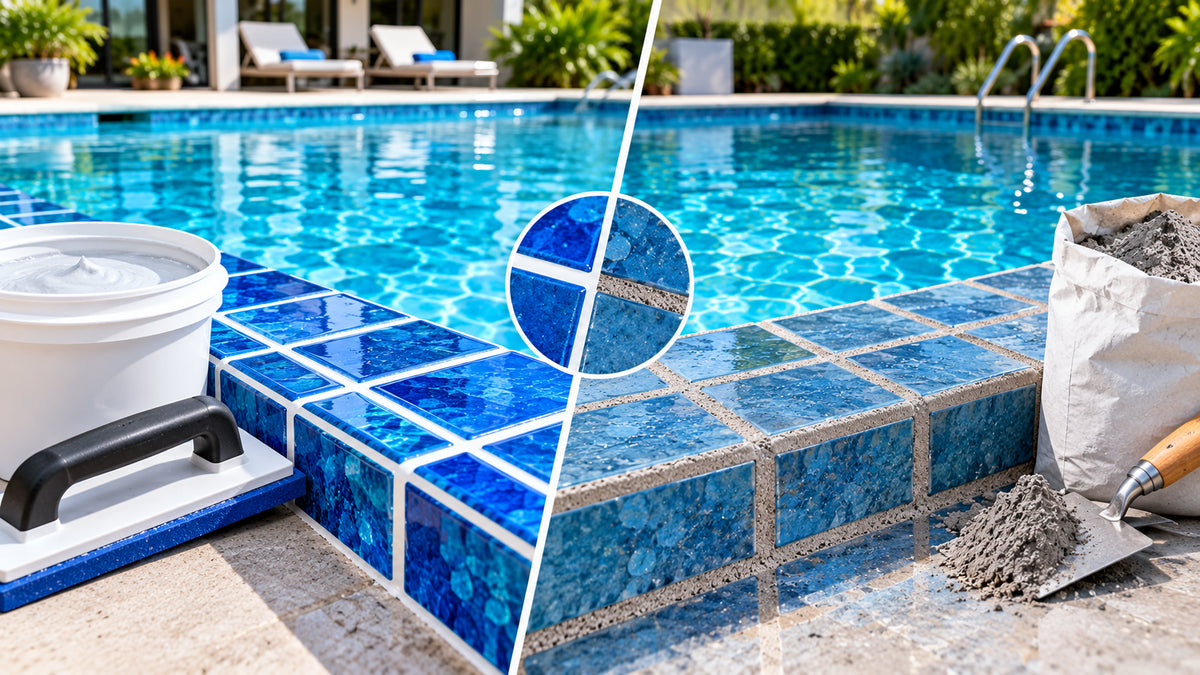
Cement grout is Portland cement mixed with sand or fillers, usually with polymer additives, and it hardens as it reacts with water. Epoxy grout is a two-part resin and hardener system that cures through a chemical reaction.
Composition, Porosity And Water Resistance
Cement grout is porous. Water, chlorine and dissolved minerals move into it slowly, which is why joints stain, soften and erode over time. Polymer additives and sealers slow that down. Epoxy tile grout absorbs almost no water, so its water resistance is far higher. In the US, look for ANSI A118.3 on epoxy products and A118.6 or A118.7 on cement ones.
Epoxy Grout Pros And Cons For Swimming Pools
Epoxy resists stains, algae and most pool chemicals, and it barely shrinks, so joints stay tight. It needs no sealer. The downsides are real, though. Working time is often under an hour, cleanup is messy, and the job suits an installer who has done it before. Some epoxies also yellow in strong sun, so check the UV rating.
Cement Grout Pros And Cons For Swimming Pools
Cement grout is cheap, forgiving and easy to find. Every tiler knows how to use it, and polymer-modified versions hold up reasonably well in ceramic pools with balanced water. The weak spot is chemistry. Chlorine, acid washes and low pH slowly eat at the cement, leaving sandy, crumbling joints. It also needs sealing, and full strength takes about 28 days.
Epoxy Vs Cement Grout: Chlorine And Chemical Resistance
The CDC recommends at least 1 ppm free chlorine in pools and a pH of 7.2 to 7.8. Cement grout copes with those levels for years. Repeated shock treatments, which push chlorine far higher, and acidic water shorten its life. Epoxy grout is chlorine resistant at both normal and shock levels and tolerates acid cleaning better, which is why it’s common in commercial pools.
How Each Grout Performs In Saltwater Pools
Saltwater pools aren’t as salty as the sea. Most run around 3,000 ppm, roughly a tenth of seawater’s 35,000 ppm. Still, the generator produces chlorine constantly, and salt can crystallize inside porous joints, leaving white deposits and pushing the grout apart. Epoxy avoids most of this because nothing soaks in. Cement works with a good sealer and regular freshwater rinsing of the waterline.
Epoxy Vs Cement Grout Cost
Epoxy typically costs several times more per pound than cement grout, and installers often charge more labor for it. Tile grout is a small slice of a full tiling budget, so the total gap on a pool is usually modest.
Materials, Installation And Long-Term Maintenance
Cement costs less up front but adds sealing, periodic repairs and, in harsh water, early regrouting. Over 10 to 15 years the gap often narrows. Get quotes for both, since prices vary by brand, region and pool size.
Which Grout Works With Glass, Ceramic And Porcelain Pool Tiles?
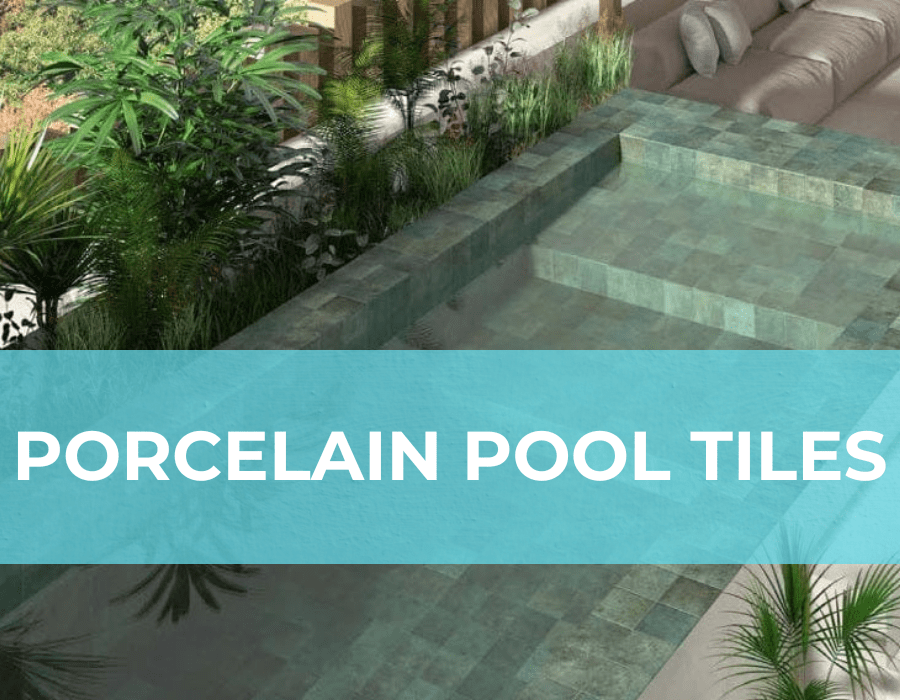
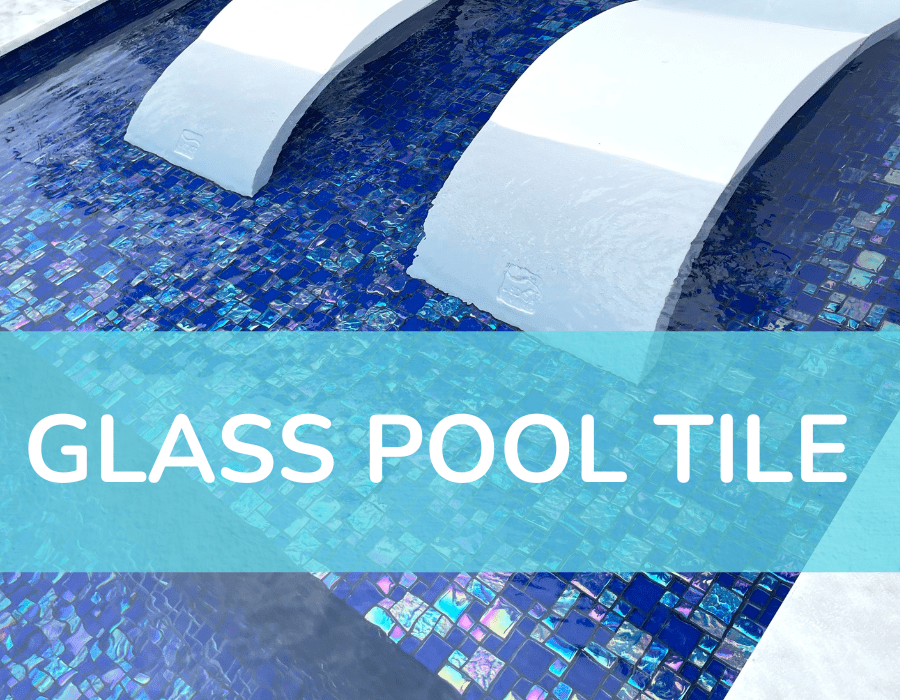
For glass mosaics, epoxy is the safer pick. Its smooth finish is gentle on glass, the color stays consistent, and mosaics have many narrow joints where stains show fast. Sanded cement grout can scratch some glass, so use unsanded if you go with cement. Ceramic and porcelain take either type. Porcelain’s low absorption pairs well with epoxy, while ceramic waterline bands often do fine with polymer-modified cement.

Installation And Joint-Width Considerations
Joint width decides what you can use. Unsanded cement grout suits joints up to about 1/8 in, and sanded grout covers wider ones, commonly 1/8 to 1/2 in. Epoxy works from around 1/16 in. Mix epoxy in small batches and clean up fast. Follow the manufacturer’s cure time before filling the pool, and use flexible sealant, not grout, at corners and changes of plane.
How To Maintain Swimming Pool Grout
Keep pH between 7.2 and 7.8 and brush the waterline every few weeks with a soft nylon brush. Skip steel brushes, and go easy on acid washes if you have cement joints. Reseal cement grout on the manufacturer’s schedule, often every one to two years. Check joints each season and repair small cracks before water gets behind the tile.
FAQs
Is Epoxy Grout Better Than Cement Grout For Swimming Pool Tiles?
In most pools, yes. Epoxy is non-porous, resists chlorine and stains, and needs no sealing. Cement costs less and works well on ceramic tile when water chemistry stays balanced.
What Are The Pros And Cons Of Epoxy Grout?
Pros: strong stain, chemical and water resistance, with very little shrinkage. Cons: higher cost, short working time, tougher installation, and possible yellowing in strong sun.
What Is The Cost Difference Between Epoxy Grout And Cement Grout?
Epoxy usually costs several times more per pound, plus extra labor. Across the whole tiling job, the difference is often modest.
Is Epoxy Grout Resistant To Chlorine In Swimming Pools?
Yes. It handles normal and shock-level chlorine well. Check the product data sheet for pool and UV ratings.
How Long Does Grout Last In Swimming Pool Tiles?
Cement grout often lasts 5 to 10 years in pools, depending on water chemistry and sealing. Epoxy usually lasts longer when installed correctly. Treat these as rough ranges.
Which Pool Grout Should You Choose?
Pick epoxy for glass mosaics, saltwater pools, heavily treated water, or any pool where you want to avoid regrouting. Pick polymer-modified cement for ceramic tile on a tighter budget, and commit to sealing it and keeping the water balanced.
If you’re unsure, ask your installer which products they’ve used in pools like yours, then confirm the pool rating on the data sheet before you buy.

Written by Tiles and Deco
READ MORE
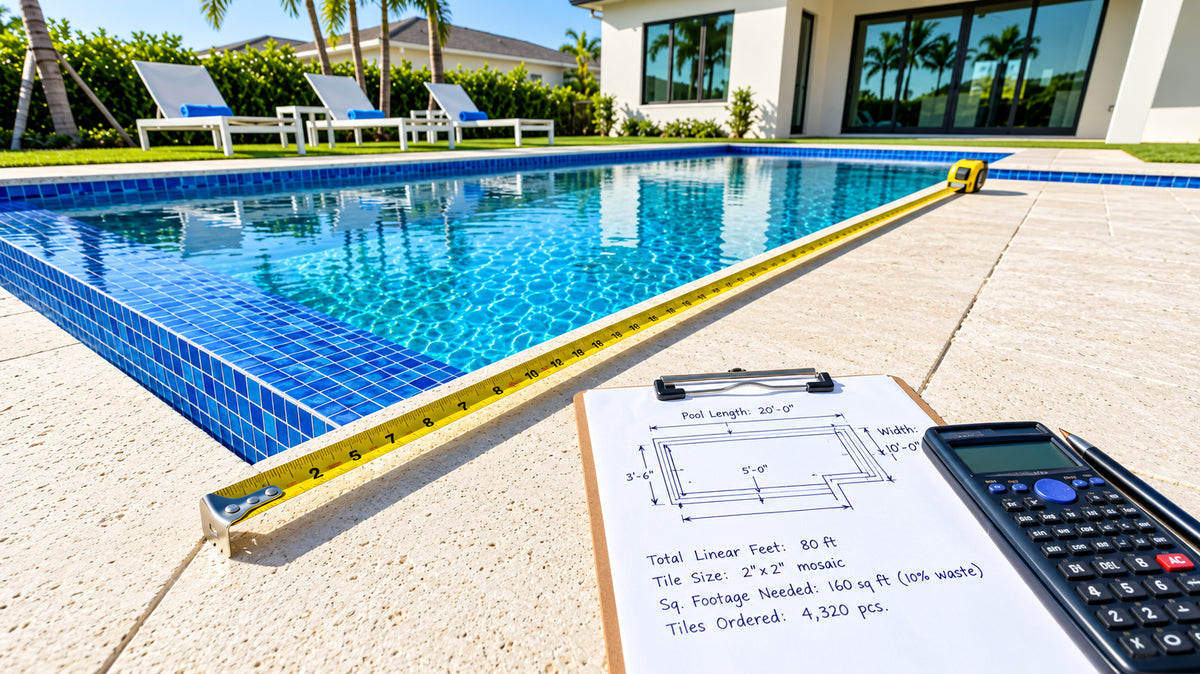
How Many Tiles Do You Need for Your Pool? A Calculation Guide
Run short on pool tiles halfway through the job, and you've got a problem. The reorder might come from a different production batch, and shade differences between batches are common, especially in ...
Read more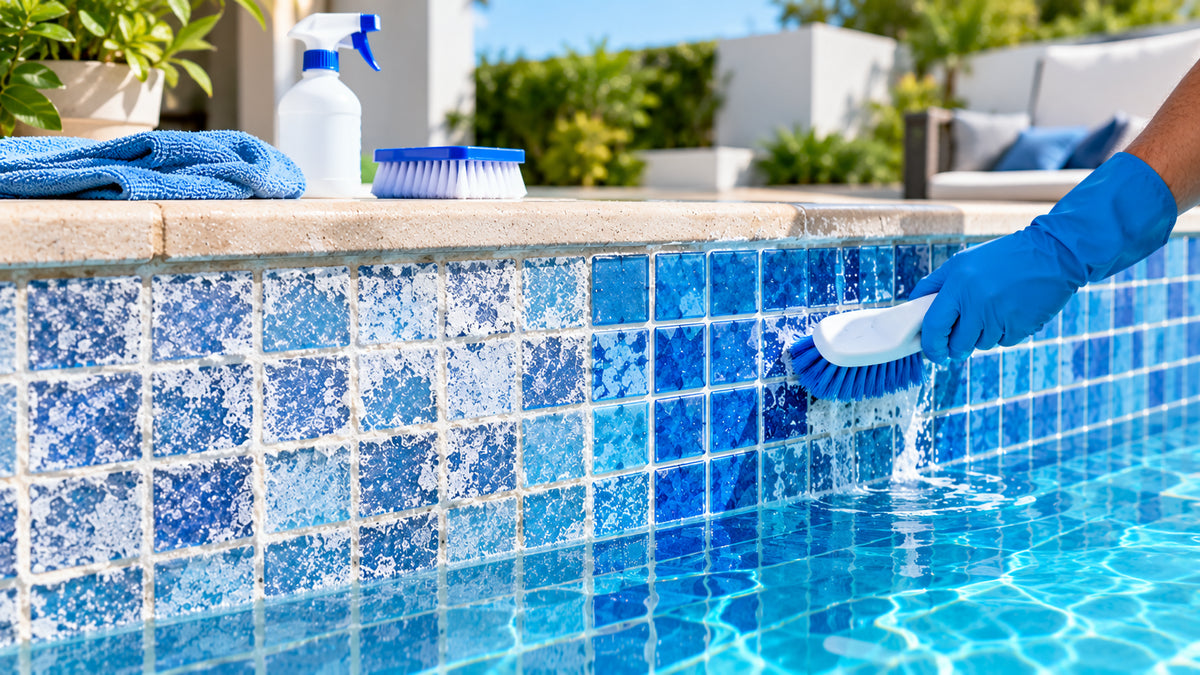
How To Remove Calcium Buildup From Pool Tiles Safely
Those white, crusty bands along the waterline look like dirt, but a scrub brush alone rarely shifts them. It’s calcium scale, and the longer it sits, the harder it bonds to the tile. Most owners sp...
Read more