





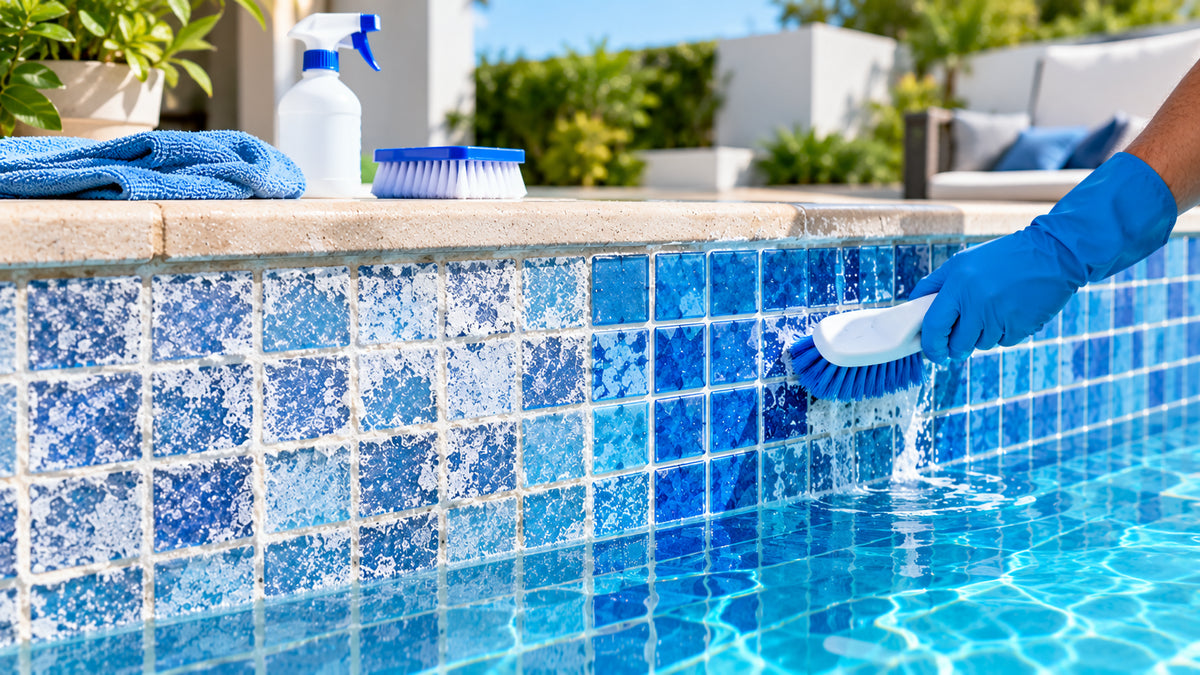
How To Remove Calcium Buildup From Pool Tiles Safely
Those white, crusty bands along the waterline look like dirt, but a scrub brush alone rarely shifts them. It’s calcium scale, and the longer it sits, the harder it bonds to the tile. Most owners spot it when the crust turns rough under a fingertip. A good pool tile cleaner dissolves the mineral, which protects glazes, glass faces and grout.
The wrong product causes damage. Strong acid can eat cement grout, and a gritty pad can leave permanent scratches on glass. Scale also follows water chemistry: hard water, high pH and heat all push calcium out of solution. Safe cleaning comes down to the right cleaner, a soft brush and a patch test. Prevention matters too, because scale returns fast if the water stays hard. Grab gloves and goggles first.
What Causes White Calcium Deposits On Pool Tiles?
Pool water evaporates at the surface and leaves its dissolved minerals behind. Calcium carbonate is the usual result, and it builds fastest where splashes dry along the tile line. Hard fill water adds more calcium with every top-up.
Many pool guides suggest calcium hardness of 200 to 400 ppm and a pH of 7.2 to 7.8 (the CDC’s range). Drift above those numbers and the scaling risk climbs.
How To Recognize Calcium Scale At The Waterline
Calcium carbonate looks white or gray, feels chalky and gritty, and forms a clean band at the waterline. Put a few drops of white vinegar on the crust. If it fizzes and softens, it’s carbonate and fairly easy to treat.
If nothing happens, you may have calcium silicate, a harder gray scale that acids barely touch. Algae stains are different: green or black, and slimy.
How To Choose A Cleaner For Pool Tile Calcium Buildup
Three options cover most jobs. White vinegar (about 5% acetic acid) suits light scale. Calcium scale removers, usually built on sulfamic or citric acid, handle moderate buildup. Stronger acids exist, but they belong in professional hands. Pick the mildest product that works.
Check Cleaner Compatibility With Tile And Grout
Acid softens cement grout and leaves sandy joints, so keep contact short and rinse well. Natural stone etches easily and shouldn’t see acid at all. For glass tile, avoid any product containing fluoride, which can etch the surface. Glazed ceramic and porcelain handle mild acids well, and epoxy grout tolerates them better than cement. When in doubt, follow the tile or grout maker’s care instructions.
How To Clean Calcium Buildup From Pool Tiles Step By Step
Prepare The Surface And Test A Small Area
Wear gloves and goggles, and keep the area ventilated. Never mix acid cleaners with chlorine products, because the combination releases toxic chlorine gas. Brush off loose debris and wet the surrounding grout so it absorbs less acid.
Then test a hidden patch of about 1 sq ft. Wait the label time, rinse, and check for dulling, clouding or softened grout.
Apply Cleaner, Scrub Gently And Rinse
Spray or sponge the cleaner onto a 2 to 3 ft section. Let it work for the time on the label, often 5 to 10 minutes. Scrub with a soft nylon brush and rinse with clean water. Repeat on stubborn spots, because leaving acid to sit longer risks damage. Test your pool’s pH afterward, since runoff can shift it.
How To Clean Glass, Ceramic And Porcelain Pool Tiles
Glass needs the gentlest touch: a soft cloth or nylon pad with vinegar or a glass-safe cleaner. Skip pumice and abrasive pads. Ceramic glaze can dull, so use mild acid and short contact times.
Porcelain is dense and takes most mild cleaners. Textured finishes trap scale in their grooves, so use a nylon brush and a little more patience.

Pool Tile Cleaning Products And Tools To Avoid
Most avoidable damage comes from a short list:
-
Wire brushes and steel wool
-
Pumice stones on glass or glazed tile
-
Undiluted muriatic acid on cement grout
-
Pressure washers aimed at grout joints
-
Acid cleaners mixed with chlorine or bleach
When To Call A Professional Pool Tile Cleaner
Call one if the scale won’t fizz with vinegar, covers a large area, or hasn’t budged after two rounds. Calcium silicate usually needs specialist methods such as bead blasting. A pro is also the safer choice when grout is loose or tiles are etched, since more scrubbing makes both worse.
How To Prevent Calcium Buildup From Returning
Test your water at least monthly and keep calcium hardness, pH and alkalinity in range. Pool professionals often check balance with the Langelier Saturation Index, where a reading near 0 is the target. Brush the waterline weekly, wipe splash zones, and consider a scale inhibitor if your fill water is hard. If hardness keeps climbing, partly drain and refill with softer water.
Pool Tile Cleaning And Maintenance Checklist
-
Vinegar test done to identify the scale
-
Cleaner matched to tile and grout
-
Patch test completed
-
Gloves, goggles and ventilation ready
-
Soft brush used, then a full rinse
-
pH retested after cleaning
-
Waterline brushed weekly
FAQs
How Do You Remove Calcium Buildup From Pool Tiles Without Damaging Them?
Test a hidden patch, apply a mild acid cleaner such as white vinegar or a labeled scale remover, scrub with a soft nylon brush, and rinse well. Avoid abrasive tools.
What Is The Best Pool Tile Cleaner For Calcium Deposits?
A pool-rated calcium scale remover that lists your tile type works best for moderate buildup. Use vinegar for light scale.
Can Vinegar Remove Calcium Buildup From Swimming Pool Tiles?
Yes, on light calcium carbonate. It can still soften cement grout, so keep contact short and rinse. It won’t remove calcium silicate.
How Often Should Swimming Pool Tiles Be Cleaned?
Brush the waterline weekly and do a deeper clean when scale appears. In hard water areas, that may be every few months.
How Can You Prevent Calcium Buildup On Pool Tiles?
Keep calcium hardness, pH and alkalinity balanced, brush weekly, and use a scale inhibitor if needed. Partly refill with softer water when hardness runs high.
Keeping Pool Tiles Clean For Good
Calcium scale is easier to stop than to scrub. Identify it with a vinegar test, choose the mildest cleaner your tile and grout can take, and work in small, well-rinsed sections. Then keep the water balanced so you don’t repeat the job. If the deposits still won’t budge, a professional can save your tiles.

Written by Tiles and Deco
READ MORE
Epoxy vs Cement Grout: Which Is Best for Swimming Pool Tiles?
Grout looks like a minor detail until it fails. A pool is the harshest place for it: constant water, chlorine or salt, sun, and temperature swings. Cracked or stained joints let water slip behind t...
Read more
Choosing The Best Tiles For Saltwater Pools That Last Longer
Saltwater pools get called gentle, and the water is: most run around 3,000 to 3,500 ppm salt, about a tenth of seawater's 35,000 ppm. The tiles still take a beating. A salt cell makes chlorine arou...
Read more